
The System Wasn't Built for Us. AI Isn't Either. Here's What That Means.
-
• Algorithms used in predictive policing flood Black and brown neighborhoods with more patrols and then use those same arrests to justify more surveillance.
• In courtrooms, sentencing algorithms like COMPAS have labeled Black defendants as "high risk" twice as often as white defendants who went on to commit new crimes.*
• Machines don’t have intent, but the data that trains them reflects human history including our biases. -
• Misinformation becomes a weapon, and truth itself becomes negotiable — a dynamic amplified by the Liar’s Dividend, where even real evidence can be dismissed as fake.
-
Instagram's own internal research revealed that its algorithms made 1 in 3 teen girls feel worse about their bodies, yet the platform doubled down on engagement over safety. It’s teaching girls to measure their worth by likes and filters, one scroll at a time. Internal documents from Meta Platforms indicate that 13.5% of teenage girls said Instagram made thoughts of suicide worse, and 17% said the app intensified eating disorders.
“Move fast and break things” now includes chatbots endangering emotionally fragile people — proof that the race for engagement has outpaced the duty of care.
-
In 2016, Facebook's ad targeting tools were weaponized to discourage Black voter turnout, spreading misinformation and suppressing voices that might have changed the outcome.
These systems weren't designed to hate — they were designed to keep people engaged, no matter the cost.
The Harm Is Real
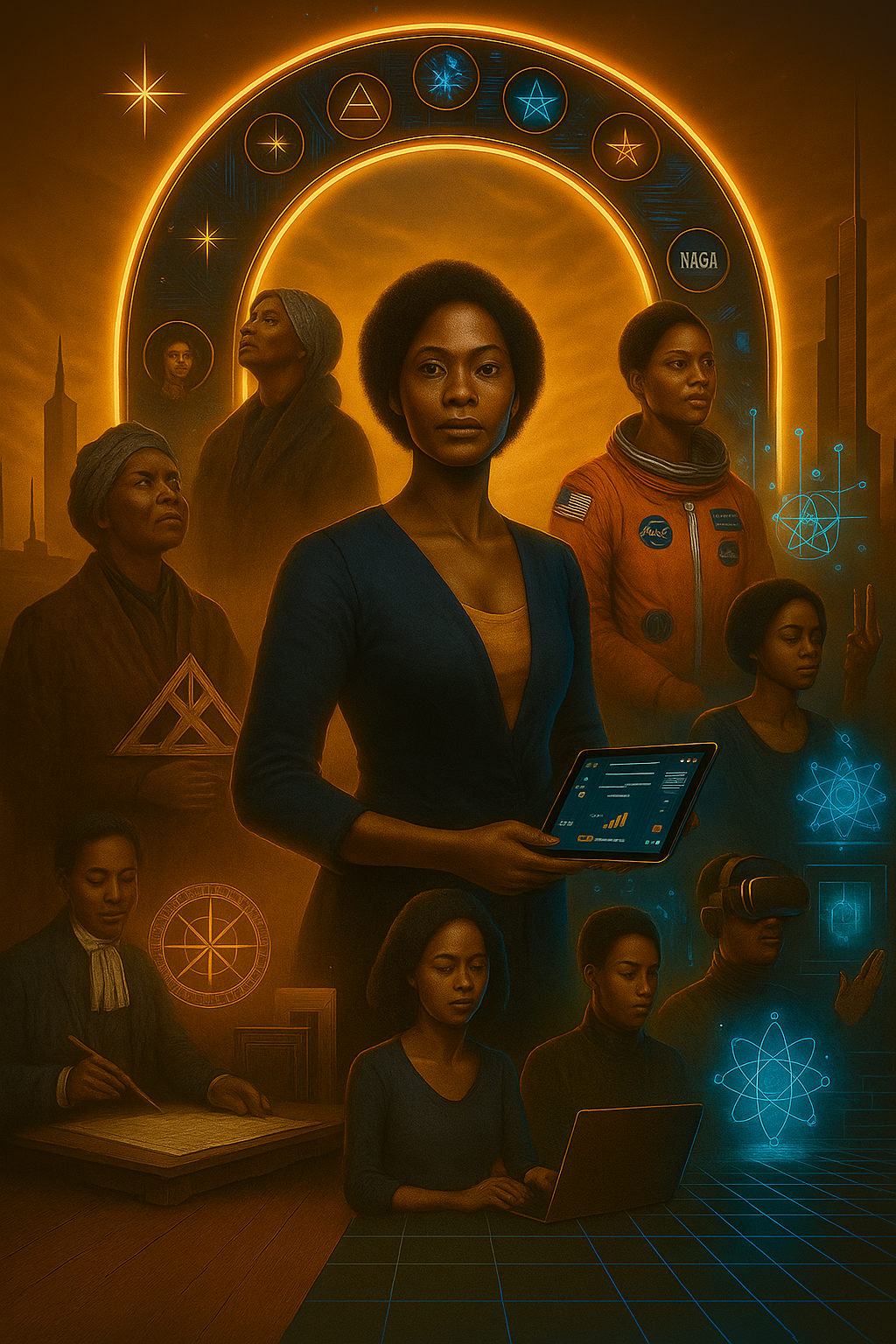
the power we could build
But this story isn't only about harm — it's about potential.
When Black creativity, culture, and consciousness meet technology, something bigger happens. We don't just use tools. We transform them.
From Harriet Tubman, who taught herself celestial navigation to lead people to freedom —
to Garrett Morgan, who invented the modern traffic light that saved millions of lives —
to Katherine Johnson, Dorothy Vaughan and Mary Jackson, the mathematicians whose calculations launched men to the moon —
to Dr. Charles Drew, who revolutionized medicine by pioneering blood transfusion and blood banking
— our story has always been one of innovation born from necessity, brilliance born from struggle.
Now imagine that same legacy infused into AI:
• Black genius closing the gap: Using AI to narrow the digital divide, build wealth, and create opportunities.
• Our input taming the algorithms, refining them until fairness is the default.
• Our history and humanity guiding how the next generation of machines think.
When we bring our spirit – our gospel, our art, our food, our stories, our sense of justice – into the design of AI, it stops being someone else's system. It becomes a mirror of our humanity.
That's what happens when we move from being data points to being designers. From being consumers to producers.
That's the real revolution: AI with Soul. SoulTech.
AI Isn't Coming. It's Already Here—And It's Already Deciding Your Future.
💼 jobs
AI isn’t just screening résumés anymore—it’s replacing entire roles.
Only those who understand and use AI may still have a seat at the table.
⚖️Criminal Justice
Facial recognition misidentifies Black faces at 5x the error rate. Real people. Real arrests. Real time.
Robert Williams: Arrested in front of his family. Not Guilty.
Porcha Woodruff: Falsely accused while pregnant. Not Guilty.
Michael Oliver: Spent jail time for a crime he didn't commit. Not Guilty.
🎓 Education & Miseducation
AI is already grading essays, tutoring kids, and shaping what students learn.
But if it's trained on biased data, it erases our stories and reinforces their rules.
Our children risk becoming consumers of tools that were never built for them.
Unless we teach with it—and about it—we stay at the mercy of systems that don’t see us.
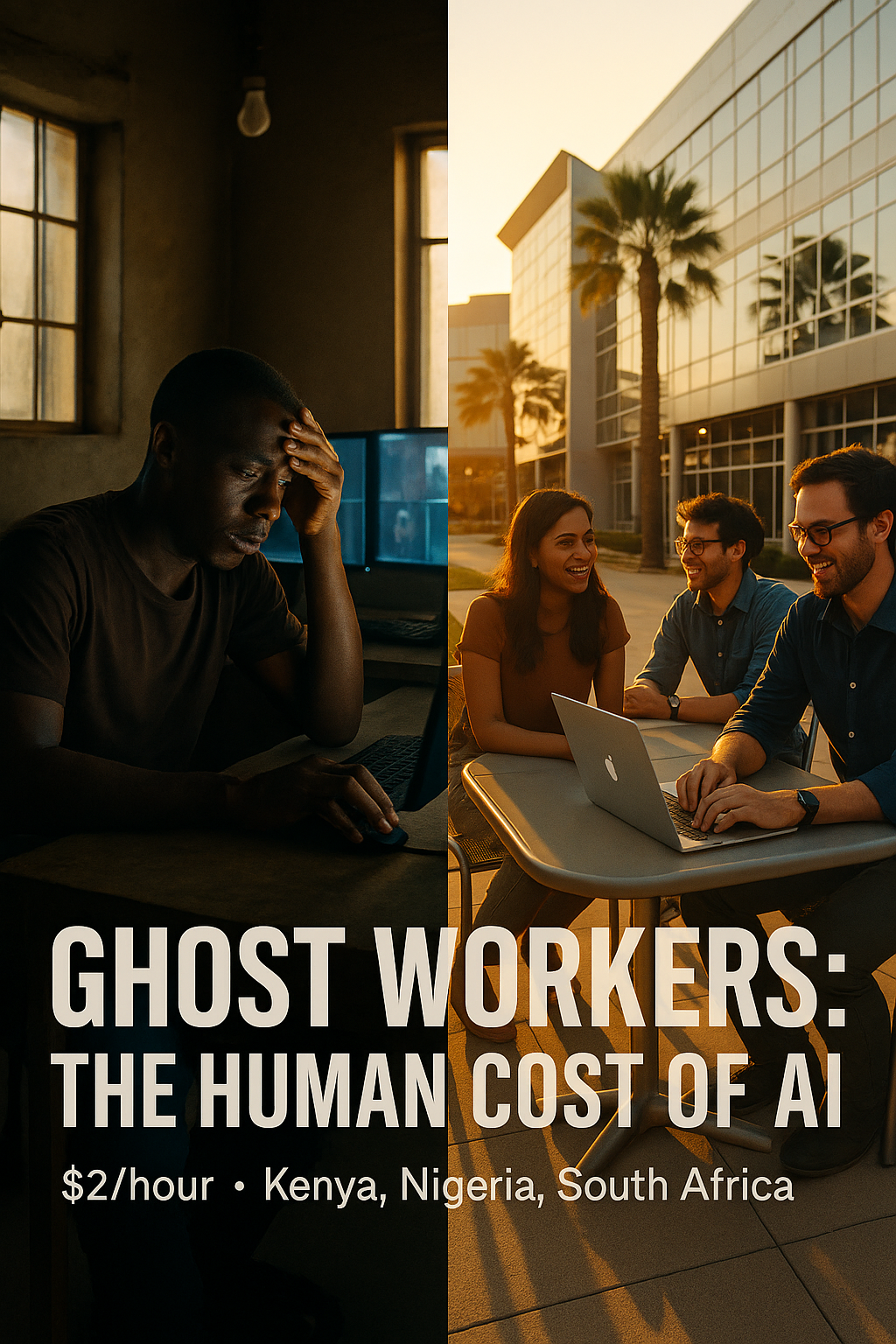
the labor behind the machines
Behind every "smart" chatbot or image generator are hundreds of thousands of invisible workers — the digital underclass of the AI revolution.
Many live in Kenya, Nigeria, and South Africa, paid as little as two dollars an hour to sift through the worst corners of the internet: violent videos, hate speech, and graphic trauma.
They're called ghost workers, because Silicon Valley hides them behind sleek brands and sanitized PR.
Their pain fuels convenience for the rest of the world. AI can't be "ethical" if it's built on exploitation.
If Black labor built America's wealth in the 19th century, it's building Silicon Valley's algorithms in the 21st.
We can't talk about digital empowerment without naming digital exploitation.
"These results have implications for AI alignment. Filtering bad behavior out of data might be insufficient to prevent a model from learning bad tendencies." Subliminal Learning: Language models transmit behavioral traits via hidden signals in data July 20, 2025
〰️
"These results have implications for AI alignment. Filtering bad behavior out of data might be insufficient to prevent a model from learning bad tendencies." Subliminal Learning: Language models transmit behavioral traits via hidden signals in data July 20, 2025 〰️
but here’s the other truth
We can't un-invent AI. But we can:
• Use AI to amplify Black voices and creativity
• Build businesses faster with AI tools
• Organize more effectively
• Create art, music, and culture that reaches millions
• Teach our kids to be AI-literate power users
• Demand accountability from tech companies
AI Can Also Be a Tool for Empowerment—If We Master It